Supernatural animals, mystical beasts, and uncanny creatures: Folklore in place
9-13 November 2026, Guangzhou, China
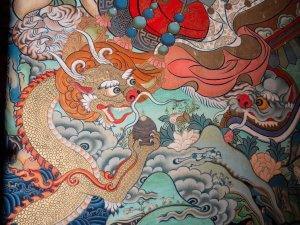
Animals and animal-like beings are prominent in folklore around the globe, and they play an important role in how people view and know the world. Individuals may be frightened, awed, amused, killed, assisted, forewarned, or rescued through their encounters with mysterious creatures. These creatures may be ordinary animals imbued with powers beyond human comprehension, ghosts of animals, shapeshifting humans or spirits, powerful deities, or categories of supernatural beings in their own right. Stories of supernatural animals occur not just in first-person experience narratives but also in legends that help root a sense of local community and in mythical tales that contribute to constructing the nation.
Ghostly pigs, spectral dogs, cunning or amorous fox spirits, murderous water-horses, helpful dolphins, noble dragons, seal lovers, world-bearing turtles, spirit animal companions, spookily prescient birds, wandering-soul mice, ferocious tigers, witch familiars, immense lake fish, animal ancestors, snail brides, spider gods, hunter-evading game animals—these are just a small selection of the uncanny creatures that have entered into and shaped human cultures.
Yet cultures, lifewJorlds, and places are mutually constitutive, and knowledge is always situated. Animal myths, legends, and narratives arise out of and develop within specific spatial and environmental contexts. This conference asks: What can place tell us about supernatural animal legends? What can mythical creatures tell us about the way people conceive of and create place? How can geographically situated animal folklore inform our understandings of cultural values—and perhaps of humanity itself?
We invite presentations that reflect on the role of place in constructing culture or the role of culture in constructing place in the context of supernatural animals in folklore, myth, legend, and tradition. The conference is open to all theoretical approaches.
Tommy Kuusela (PhD, Researcher and archivist at The Folklore Archive in Uppsala; Institute for Language and Folklore) will serve as keynote speaker.
Abstract submission: If you wish to give a presentation at the conference, please submit your proposal to co-convenor Adam Grydehøj agrydehoj@islanddynamics.org. Please use ‘Abstract for Supernatural Animals conference’ as the title for your e-mail. The proposal should include: 1) presentation title, 2) abstract (150-200 words), and 3) numbered list of authors/speakers (including e-mail addresses and affiliations for each author). All this information should be contained in the text of the submission e-mail rather than being included in an attachment. After submission, your proposal will be reviewed, and the organisers will respond with a decision as soon as possible. The earlier you submit your proposal, the earlier you will receive the decision. All presentations will be in English. The deadline for abstracts is 28 February 2026.
Conference location: The conference will be held in Guangzhou in China’s Pearl River Delta. Guangzhou is an ancient city shaped by its river and estuary environment. Guangzhou, known as ‘The City of Goats’, has an animal-related foundation myth, in which five colourful heavenly goats brought six kinds of grain to the people of the city. Over the millennia, Guangzhou’s landscape of wetlands and mountain islands has given way to a gleaming megacity, though its traditional Lingnan culture remains vibrant, and traditional music, foodways, festivals, and arts continue to be practiced. Field trips will explore Guangzhou’s rich history and culture (old and new) through visits to heritage sites such as Yong Qing Fang and its Cantonese Opera Museum, the colonial enclave of Shamian Island, the Chen Clan Ancestral Hall folk art museum, and the Pearl River itself (along which we will take a nighttime cruise). Delegates will also have the opportunity to take part in what we believe will be the first-ever Guangzhou Ghost Tour. A post-conference study trip will visit the nearby city of Zhaoqing, site of the magnificent and legend-filled lake island mountains, the Seven-Star Crags, as well as home to Long Mu, the Mother of Dragons. 9-11 November will be spent in Guangzhou, and 12-13 November will be spent in Zhaoqing.
Publication opportunity: This conference is organised in association with Island Dynamics and the peer reviewed, non-fee charging open access journal Folk, Knowledge, Place
https://folkknowledgeplace.org. Presenters are strongly encouraged to submit papers for consideration for a special section of Folk, Knowledge, Place on the theme of ‘Supernatural animals, mystical beasts, and uncanny creatures’. Papers will need to match the journal’s theme and scope. The deadline for special section submissions is 30 April 2026. The aim is to allow papers that successfully pass peer review to be published in advance of the conference itself. Although we strongly encourage article submissions, it is not necessary to submit a paper to the journal or to have a paper accepted for publication in order to participate in the conference. To learn more about journal publication, please contact co-editor-in-chief Adam Grydehøj at agrydehoj@islanddynamics.org.
Conference registration: Presenters can register for the conference free of charge. Registration includes attendance at the conference presentations, participation in field trips inside Guangzhou, and a number of group meals. In order to finalise your place in the conference programme, it will be necessary for you to share in advance with the organisers the details of your plane tickets and your passport information. Those wishing to participate in the study trip to Zhaoqing will need to pay a fee to cover transportation and accommodation costs.
Travel, accommodation, and visas: Conference registration does not include accommodation or travel costs to and from Guangzhou. The organisers can assist with booking accommodation upon request. More information on recommended accommodation is coming soon. The most convenient way of reaching Guangzhou is to fly into Guangzhou Baiyun International Airport, located to the north of the city. It is possible to fly into Guangzhou Baiyun International Airport both directly from overseas and via stops in other Chinese cities. It is also possible to fly to Hong Kong International Airport or to Shenzhen Bao’an International Airport and then to take a bus or train to Guangzhou.
Citizens of many European and Asian countries now have the possibility of visa-free travel to China for up to 30 days. Citizens of other countries may need to apply for a visa. The conference organisers will provide the necessary documents for your visa application, but the application itself is your own responsibility.
Co-convenors: Adam Grydehøj (School of Foreign Languages, South China University of Technology) & Ping Su (School of Foreign Languages, South China University of Technology)
Organisers: School of Foreign Languages, South China University of Technology; ‘Folk, Knowledge, Place’; & Island Dynamics
 Xiaoxiang Ma is a PhD researcher at Queen’s University Belfast. His research examines Hong Kong horror cinema, with particular attention to how the genre reflects and participates in the construction, transformation, and gradual erosion of Hong Kong identity between the 1980s and the 2000s. He is also the Editor-in-Chief of Eutopia Journal at Queen’s University Belfast the link to which can be found below.
 Dr Tori Eliott is a Visiting Professor of English Studies at Pohang University of Science and Technology, South Korea. Her research investigates the interaction between science and the Gothic, focusing particularly on Scottish Gothic.
 Dipyaman Bhowmick is an MA student in English at Jadavpur University, India. His research interests include Gothic studies, environmental humanities, eighteenth- and nineteenth-century literature, and film studies. He has presented papers in national and international seminars and conferences, including recent papers on Mary Shelley’s The Last Man (1826) and on the Hindi-language Bollywood film “Bulbbul” (2020) through an eco-gothic lens. Dipyaman’s article “Reading Toru Dutt as a ‘Romantic’ Urban Nature Poet,” on the nineteenth-century Bengali poet Toru Dutt, was published in the online forum of the Journal of Victorian Culture. His article, “Ann Radcliffe’s Environmental Novels: “A Sicilian Romance” (1790) and “The Italian” (1796),” which examines some of Ann Radcliffe’s novels through an eco-feminist lens, recently appeared in the fourth volume of the peer-reviewed journal Sophia Luminous. His book review of John MacNeill Miller’s “The Ecological Plot” can be found in The Victorian Web. He also takes a lively interest in writing fiction, and his flash fiction “Midnight’s Soliloquy” came out in The Criterion: An International Journal in English. Dipyaman runs a Nineteenth-Century Reading Circle (NCRC) with some of his colleagues in the Department of English at Jadavpur University, where they host talks from speakers from around the world.


 Geneve Flynn is a speculative fiction editor, author, and poet. Winner of two Bram Stoker Awards, and the Shirley Jackson, Australasian Shadows, and Aurealis awards; recipient of the 2022 Queensland Writers Fellowship. Her work has been short/longlisted for the British Fantasy, Locus, Carl Brandon Parallax, and Elgin awards. Co-editor of Black Cranes: Tales of Unquiet Women, the dark fiction anthology which launched a grassroots movement in Asian women’s horror writing. Her work has been published by Weird Tales, PS Publishing, Flame Tree Publishing, PseudoPod, among others. She is Chinese, born in Malaysia, and now calls Australia home. Her research interest is in contemporary Asian female Gothic literature, diasporic narratives, and the East-Asian four-act structure.
 Kanupriya Pandey is a Doctoral Research Fellow at the Indian Institute of Technology, Tirupati, India. Her doctoral research focuses on Ecogothic readings of contemporary South Asian coastal literature, exploring the intersection of environmental violence, political trauma, and narrative form. Her broader research interests include eco-horror, eco-anxiety, blue humanities, and film studies.


 Priyank Jain is a PhD Scholar at the National University of Malaysia (Universiti Kebangsaan Malaysia). His primary research area is Indian Postcolonial Gothic. He has published research articles in Q1 Journals and has presented papers in numerous international seminars. He was awarded the “Best International Student Program” Award, ATS-UKM 2024. He has also edited an anthology of short stories on Indian Gothic titled “Gothic of the Hidden Indian Corners”. He also has experience of teaching Literature and Communication subjects in various universities. He is an avid reader, and part of various book clubs.