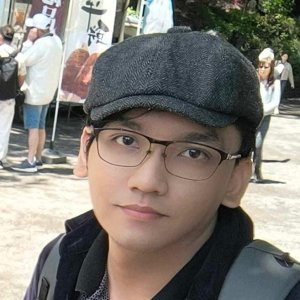
 Dr Jan Marvin A. Goh is an Assistant Professor at the University of Santo Tomas, where he previously served as Managing Editor and Editorial Staff Member of UNITAS: Journal of Advanced Research in Literature, Culture, and Society, the oldest extant multidisciplinary journal in the Philippines. He also serves as Archival Research Consultant at the Manuel V. Gallego Center for Heritage Studies. His academic engagements include participation in the Summer School on Streaming Media, Contemporary Society, and Cultural Memory (Jönköping University, 2024–2025), the Inter-Asia Cultural Studies Summer School (University of the Philippines, 2024), and the Summer School on Animals in Society (Mälardalen University, 2023). He completed the Executive Course on Research Management (De La Salle University, 2025) and has received several fellowships, including an Art Criticism Fellowship from the Kalaw-Ledesma Foundation (2025), a Literary Studies and Philippine Gothic Fellowship from Kritika La Salle: National Workshop on Art and Cultural Criticism (2025), an Urban Studies and Cultural Heritage Fellowship from Ateneo de Manila University (2019), and a Translator’s Fellowship from the Komisyon sa Wikang Filipino (2017). His research appears in the special section “The Politics of Folklore in Asian Gothic” in Manusya: Journal of Humanities and has been presented at numerous local and international conferences, including 45 Years of Jacques Derrida’s “Signature Event Context” (Philippines), Asian Folklore, Folk Horror and the Gothic (Taiwan), International Consortium of Critical Theory (South Korea), Critical Island Studies (Indonesia), Captivating Criminality 9: Crime and the Gothic (Thailand), and Romancing the Gothic’s Devils and Justified Sinners (United Kingdom). He is an active member of the Gothic in Asia Association and the National Research Council of the Philippines (NRCP) among others.
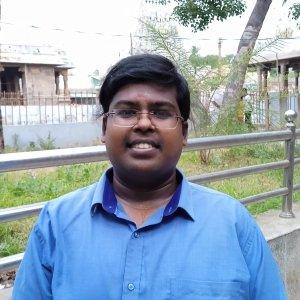 Dr Muthu Swamy Nathan M is an Indian researcher currently working as an Assistant Professor of English in the Department of English at Kings Engineering College, Chennai, India. His research interests include Gothic studies, trauma theory, myth and folklore in modern fiction, and South Asian horror narratives. Over the past five years, his academic work has focused on exploring the evolution, themes, and socio-psychological dimensions of horror in literature. He pursued this specialization through both MPhil and PhD research, examining how horror functions as a cultural and narrative space that reflects trauma, gender politics, and societal anxieties.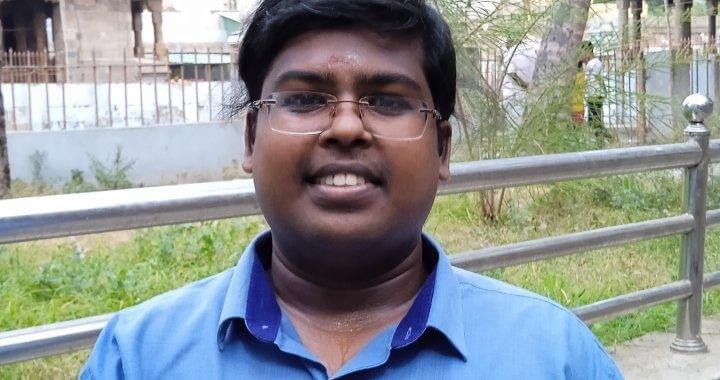


 Dr Robert Yeates is Associate Professor of American Literature at Okayama University, Japan. He is the author of American Cities in Post-Apocalyptic Science Fiction (UCL Press, 2021) and has published articles in journals including Journal of the Fantastic in the Arts, Science Fiction Studies, and European Journal of Cultural Studies. More information can be found at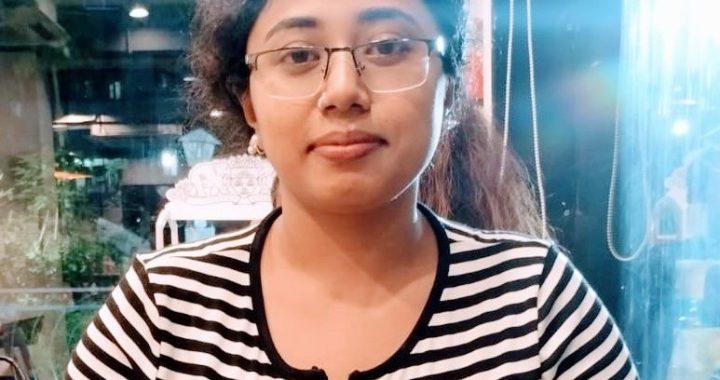
 Debadrita Saha is a PhD candidate in English Literature at Ashoka University, India, specialising in Gothic literature, film criticism, South Asian studies, and gender studies. Her work bridges Gothic studies with postcolonial and feminist literary criticism, offering fresh perspectives on Gothic traditions in Asian literature, particularly Bengali literary narratives. Debadrita has contributed significantly to Gothic scholarship through her analysis of female Gothic in the Sinister House of Secret Love series and Gothic elements in nineteenth-century Orientalist fiction. Her conference presentations include “Mapping the reimagination of the ‘travelling Heroine’ of Female Gothic” at the Ann Radcliffe Academic Conference and “The Gothic Castle as a Restraining Space for Unbridled Female Sexuality” at MAPACA, demonstrating her expertise in Gothic literary criticism. Currently serving on the Editorial Board of The Journal of the Motherhood Initiative (Demeter Press), Debadrita was formerly an Assistant Professor of English at Brainware University. Debadrita’s essays have been published in peer-reviewed journals like Rejoinder (Rutgers University), Genre en séries (OpenEditions), and The Journal of Intercultural Studies (Taylor & Francis). Her essay on consent and coercion in medieval Bengali literature was published in an edited volume titled Reconsidering Consent and Coercion in Medieval Literature by Brepols in June 2025.


 MonsterTalk has been promoting science and critical thinking since 2009. We use monsters as a springboard to talk about a variety of monster topics. We’re skeptical of the existence of monsters, but we want to understand the mysterious experiences people report.
 Dr Chawarote Valyamedhi is a full-time Assistant Professor at National Chengchi University, Taiwan. He holds PhD in Thai Dance, MA in Sanskrit, BFA in Music from Chulalongkorn University, Certificate in Japanese Culture and Language from Ryukoku University and Senshu University, Japan, and Certificate in Chinese Language and Culture from National Taiwan University. His research interests include connection between performing arts and literature, performing arts and beliefs, world performing arts, cultural history and intellectual history of dance. From July 2018 Chawarote is a visiting fellow at Taipei National University of the Arts. He has experience as lecturer at Thammasat University, Assumption University of Thailand, and as an adjunct faculty at Chulalongkorn University, Webster University Thailand, and Taipei National University of the Arts. He has served as a full-time faculty at National Chengchi University since 2021.