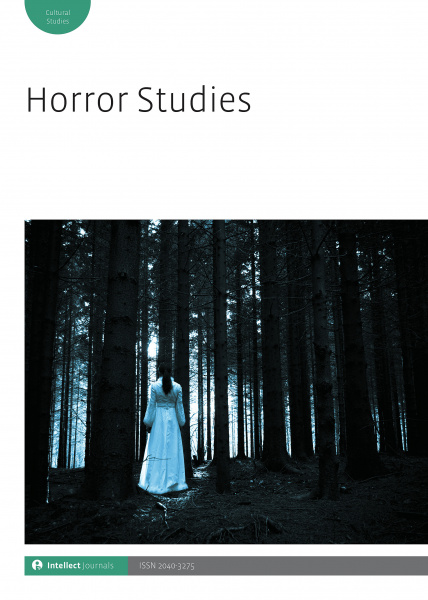
Horror Studies is a peer-reviewed academic journal devoted to the rigorous study of horror in all its manifold cultural and historical forms. With a strong interdisciplinary focus, the journal seeks to publish high-quality articles and reviews on topics relevant to the study of horror across a range of disciplines.
Horror Studies is a double-blind peer-reviewed journal that intends to serve the international academic community in the humanities and specifically those scholars interested in horror. Exclusively examining horror, this journal will provide interested professionals with an opportunity to read outstanding scholarship from a variety of disciplinary perspectives, including work conceived as interdisciplinary. By expanding the conversation to include specialists concerned with diverse historical periods, varied geography, and a wide variety of expressive media, this journal will inform and stimulate anyone interested in a wider and deeper understanding of horror.
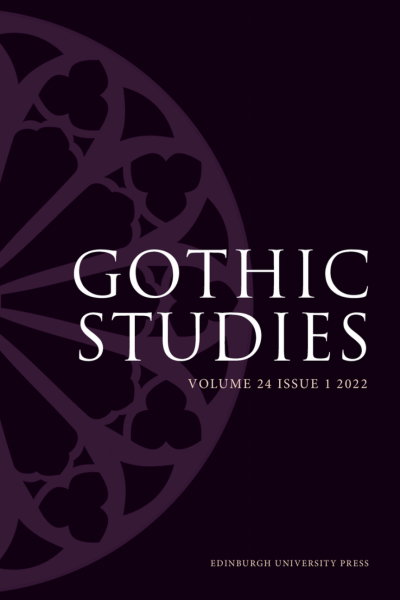
Gothic Studies is the journal of the International Gothic Association, and covers the field of Gothic studies from the eighteenth century to the present day, providing an international platform for dialogue and cultural critcism in the sphere of Gothic from within every period and media form.
The aim of Gothic Studies is not merely to open a forum for dialogue and cultural criticism, but to provide a specialist journal for scholars working in a field which is today taught or researched in academic institutions around the globe. Gothic Studies invites contributions from scholars working within any period of the Gothic; interdisciplinary scholarship is especially welcome, as are studies of works across the range of media, beyond the written word.
For information on Gothic Studies’ guidelines for submission, view the style guide here. Send your title page and anonymised manuscript to gothiceditors@gmail.com.
If you would like to propose a guest edited special issue, please write to Emily Alder, Editor, at gothiceditors@gmail.com to discuss your idea. If suitable, you will then be invited to submit a full proposal for peer review. Please read the instructions for guest editors for more information.
In 2020, Gothic Studies published a special issue on Gothic Folklore and Fairy Tale (22.1) edited by one of our members.
eTropicpublishes new research from Arts, Humanities, Social Sciences and allied fields on the variety and interrelatedness of nature, culture, and society in the Tropics.
Special Issue themes draw together scholars of the tropics, including: Northern Australia, Southeast Asia, South Asia, East Asia, Latin America, the Caribbean, tropical Africa, the Indian Ocean Islands, the Pacific, Hawai\’i, and the American South.
eTropic journal is free open access, indexed in Scopus, Google Scholar, DOAJ and Ulrich\’s, and archived in Pandora and Sherpa/Romeo. eTropic uses DOIs and Crossref. The journal is ranked Scimago Q1.
Editor-in-Chief Associate Professor Anita Lundberg Founding Editor Professor Stephen Torre
In 2019, eTropic published a double special issue on Tropical Gothic (18.1 and 18.2) co-edited by one of our members, which can be accessed here
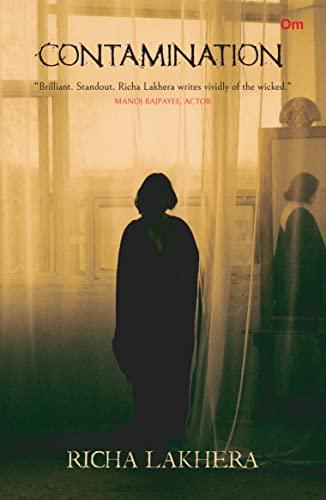
Contamination by Richa Lakhera comes off as a supernatural cum horror genre-ic intervention post Hungry Gods where both elements of nature and the supernature come together to haunt and hunt the reader. Bollywood’s romance with “rural legends” like Makdee (Spider), Kaali Khuhi(Black Well) and Tumbaad is reflected in Lakhera’s Indian indie horror that is perfect for you during the chill of the dead winter. Asian-horror readers shall find similar lines of familiarity in terms of violence against women, shamanism, and the revival of the rural-lore of witches. The psychological, social and postcolonial dimensions of the novel sharpen the lens through which criticism is inked and read. Debuted in September, 2022 this horror cum thriller shall keep you on your heels, reeling against the unpredictability and sheer suddenness of the storyline, a perfect read for cold wintry and looming midnights. (Ananya Roy, University of Delhi)
Dr Devaleena Kundu is an Assistant Professor at the School of Liberal Studies, UPES, Dehradun, India. Former Fulbright Scholar at the University of California, Berkeley, she holds a PhD in English Literature from EFL University, Hyderabad, India. Her research primarily dwells on literary and popular cultural representations of death and dying. She is also interested in the depiction of crime and the criminal investigative eye in popular media.
Kathleen Shaughnessy is a fifth-year PhD candidate in English at the University of Iowa, USA. She specializes in intersections between the gothic, science, and crime in 19th century British literature. She is also interested in popular transnational and imperial fiction of the period, as well as neo-Victorian literature and globalgothic studies. Her current dissertation research studies how 19th century scientific innovations and imperial projects helped to form the Gothic monster in fin-de-siècle popular fiction.
Ananya Roy has completed her masters in English Literature from Jesus and Mary College, University of Delhi, India. Her focus (as an independent research scholar at present) on research is widespread ranging from the renaissance to the modern contemporary literary world, more significantly on gothic, horror, noir, crime, speculative and science fiction(s). Her works have been previously published on e-journals like IJELLH, IJOES, CLRI, IJECLS. Apart from academic articles, she also writes on social issues, winning numerous essay and debate competitions with her pieces being published on magazines like Competition Success Review (CSR) and Pratiyogita Darpan. She has recently self-published her poetry collection Kaleidosocope: Of Women Behind the Curtains (2020) on Notion Press besides her dystopian novel Torque (2018) on Amazon self-publish. Notion Press also published her winning piece in Songs in Isolation: A Collection of Poems (2020). Forever an enthusiast in everything uncanny and unnerving, Ananya would walk the extra mile in search of the multiverse of alternate realities of fiction!
Dr Ruth Heholt is Associate Professor of Dark Economies and Gothic literature at Falmouth University, UK. She is author of Catherine Crowe: Gender, Genre, and Radical Politics (Routledge, 2020) and co-author of Gothic Kernow: Cornwall as Strange Fiction (Anthem Press, 2022). She is co-editor of several collections including Gothic Britain: Dark Places in the Provinces and Margins of the British Isles (2018), and Haunted Landscapes (2017). She has organised international conferences including Folk Horror in the Twentieth Century (Falmouth and Lehigh Universities 2019) and is editor of the peer reviewed journal Revenant: Critical and Creative Studies of the Supernatural. Her research interests include Gothic, Gender, Ghost Stories, Masculinity, Crime Fiction, Folk Horror, and Domestic Abuse.
Wynona Villa is currently working on her Master\’s degree in Literary and Cultural Studies at the Ateneo De Manila University, Philippines. Her research interests include Asian Folklore, Horror Studies, Philippine Folk Horror, and Asian Literature.
10.00-10.30 Conference Opening Remarks (Zoom Stream A)
10.30-12.00 – Zoom Stream A (single panel)
Panel 1: Spatial Representation and Gothic Narrative in Modern Japanese Literature (Zoom Stream A)
Panel Chair: Jaejin Yu
Presenters: (panel starts in Korea at 11.30)
Jeonghoon Ryu (Korea University, South Korea), “The Haunted House and Gothic Narrative in the Ghost Tower by Ruiko Kuroiwa”
Jihu Park (Korea University, South Korea), “Elements of Western Gothic Novels Appearing in Cannibal Ghost Stories about Nanyo”
Kahyun Lee (Korea University, South Korea), “Gothic in Mishima Yukio’s work: Relationship between Women and Home”
13.00-15.00 – Zoom Stream A and B (parallel panels)
Panel 2A: Folklore and Popular Culture (Zoom Stream A)
Panel Chair: Bibhuti Bhusan Biswas
Presenters: (panel starts in India at 10.30, in Thailand at 12.00, in the Philippines at 13.00)
Debaditya Mukhopadhyay (Manikchak College, University of Gourbanga, India), “Definitely Not Just a Gentleman’s Game: Haunted Nature of Cricket in Indian Popular Imagination and its Representation in Urban Lores”
Jan Marvin A. Goh (University of Santo Tomas, Philippines), “Entering the Gothicized Realm of Lagim: Towards a Ludological Exploration of Philippine Folkloric Materialization through a Trading Card Game”
Suriyaporn Eamvijit (Thammasat University, Thailand), “Ong (องค์) as Idols: Redefining Guardian Spirits among Young Spiritual Practitioners in Thailand”
Pimpawan Chaipanit (Prince of Songkla University, Thailand), “From Folk Horror to Urban Legend: A Case Study of Representation and Adaptation of Thai Ghostlore in the Contemporary Thai Popular Ghost Stories and Horror Fiction by Pongwut Rujirachakorn”
Panel 2B: Ghost Tales (Zoom Stream B)
Panel Chair: Aqsa Eram
Presenters: (panel starts in India at 10.30, in Thailand at 12.00)
Megha Solanki (The English and Foreign Languages University, India), “Myth, Belief and Journey in the Afterlife: Tracing Freedom in Yangsze Choo’s The Ghost Bride”
Abhishek Sarkar (Jadavpur University, India), “Bengali Ghosts and Demons in a Carrollian Dreamworld: Fantasy and Satire in Konkaboti”
Isaraporn Pissa-ard (University of Chiang Mai, Thailand), “The Political Role of Oral Storytelling, Folklore, and the Gothic in the Thai novel Juti [Rebirth] (2015) by Uthis Haemamool”
Soumyarup Bhattacharjee (Indian Institute of Technology Bombay, India), “Gothic Allegory and Postcolonial Malaysia in Beth Yahp’s The Crocodile Fury”
15.15-17.15 – Zoom Stream A and B (parallel panels)
Panel 3A: Shamanism, Mysticism, Animism (Zoom Stream A)
Panel Chair: Debaditya Mukhopadhyay
Presenters: (panel starts in the UK at 8.15, in Iran at 10.45, in India at 12.45)
Haniyeh Asaadi, Ali Salami (University of Tehran, Iran), “Shamanistic Practices Among the Southerners of Iran as Depicted in Gholamhossein Saedi’s Ahle Hava”
Elizabeth Cherian (English and Foreign Languages University, India), “Devotion to Deification: Act of Surrender in the Folk Art Form Theyyam”
Leonie Rowland (Manchester Metropolitan University, UK), “‘A phone was found inside her’: Techno-Animism as Trauma in the Folklore of Ju-On: Origins (2020)”
Katarzyna Ancuta (Chulalongkorn University, Thailand), “From Folklore to Folk Horror: Rang Zong (2021) as a Case for Asian Folk Horror”
Panel 3B: Ethnography and the Gothic (Zoom Stream B)
Panel Chair: Devaleena Kundu
Presenters: (panel starts in the UK at 8.15, in India at 12.45, in Thailand at 14.15)
Ramakrishnan (Central University of Jharkhand, India), “Changing Perception on the Horror Stories of Deities and Ghosts in the Context of the Impact of Modernity in a South Indian Village – An Emic Perspective”
Dipankar Dey, Bibhuti Bhusan Biswas (Central University of Jharkhand, India), “Horror Episode of Aboriginal Sentinelese Tribe in North Sentinel Island, Andaman Islands, India”
Pokkasina Chathiphot, Pannawadee Srikhao, Nilobol Phuraya, Yanika Saensuriwong (Sakon Nakhon Rajabhat University, Thailand), “Woven Textiles in the Ritual of Spirit Worship of the Tai Ethnic Group in the Mekong Basin”
Sean McHugh (Nanjing University of Information Science andTechnology, China), “Gothic Deception and Hindu Myth, The Wicker Man as Critique of Western Apollonian over Asian Dionysian Mind”
Conference Day 2: Thursday 20 October 2022
10.00-12.00 – Zoom Stream A and B (parallel panels)
Panel 4A: Spirits, Nature and the Gothic (Zoom Stream A)
Panel Chair: Jan Marvin A. Goh
Presenters: (panel starts in California on the previous day at 19.00, in Atlanta on the previous day at 22.00, in Thailand at 9.00)
Sydney Van To (University of California, Berkeley, USA), “Possession as Critique: Southeast Asian Folk Horror”
Gabriel Eljaiek-Rodriguez (Spelman College, USA), “Colombian Cinematic Transformations of Japanese and Korean Horror”
Chairat Polmuk, Saowapark Khanman (Chulalongkorn University, Thailand), “Guts and Roots: Plant, Female Monstrosity, and Modernity in Thai Folklore and Cinema”
Li-hsin Hsu (National Chengchi University, Taiwan), “The Goddess of Silkworms, Mulberry Trees, and the EcoGothic”
Panel 4B: Folklore and Crime Stories (Zoom Stream B)
Panel Chair: Chung-hsuan Huang/Chih-yi Cheng
Presenters: (panel starts in Pennsylvania on the previous day at 22.00, in Hong Kong at 10.00, in Japan/Korea at 11.00)
Bohyun Kum (Sungkyunkwan University, South Korea), “Analyzing the Grotesque Elements of 1930’s Korea Detective Novels”
Chiho Nakagawa (Nara Women’s University, Japan), “Japanese Island Folk Horror/Mystery in the Twenty-First Century”
Shun-yu Wan Nicola Ulaan (City University of Hong Kong, Hong Kong) “Schizophrenic Women in the Urban Gothic Hong Kong in A Very Short Life and Dream Home”
Süleyman Bölükbaş (Penn State University, USA), “Theorizing Turkish Islamic Gothic: Religion, Rituals and Asia Minor”
13.00-14.30– Zoom Stream A and B (parallel panels)
Panel 5A: Myth and Urban Legend (Zoom Stream A)
Panel Chair: M. Ramakrishnan
Presenters: (panel starts in India at 10.30)
Christie Rachel Saji (English and Foreign Languages University, India), “Kuttichathan in Popular culture: A Negotiation between Obedience and Agency”
Ananya Roy (University of Delhi, India), “Forests and Fortresses: The Impenetrable Domain of Spiritual Force Associated with Nature in Indian Horror Culture”
Samantha Landau (University of Tokyo, Japan), “Representations of Feminine Monstrosity and the Numinous in Japanese Folklore and 20th Century Fiction”
Panel 5B: Folklore and Education (Zoom Stream B)
Panel Chair: Chiho Nakagawa
Presenters: (panel starts in India at 10.30, in Japan at 14.00)
Pulkita Anand (Govt PG Shahid Chandrashekar College, Jhabua, India), “Vikram and Betal: A Gothic Folklore”
Sarah Olive (University of Bangor, UK), “Education, Asian Folklore, and the Gothic”
Aqsa Eram (University of Lucknow, India), “Gothicized Colonial Encounters: Treatment of Indian Folklore in Flora Annie Steel’s Short Fiction”
14.45-16.15 – Zoom Stream A (single panel)
Panel 6: Fairy Tales and Folklore (Zoom Stream A)
Panel Chair: Katarzyna Ancuta
Presenters: (panel starts in Iran at 10.15, in India at 12.15, in Bangladesh at 12.45)
Saeedeh Esmailzadeh, Maryam Soltan Beyad (University of Tehran, Iran), “Gothic Spaces, Fantastic Creatures and Individuals in One Thousand and One Nights”
Aparajita Hazra (Diamond Harbour University, India), “Of Roopkatha and Itihasa: Reading the Nation in Fairytales of Bengal”
Muhammed Shahriar Haque (East West University, Bangladesh), “Bhoot Legacy: Gothicizing folklore in Pett Kata Shaw”
16.30-18.00 – Zoom Stream A (single panel)
Panel 7: Monsters and Zombies (Zoom Stream A)
Panel Chair: Ananya Roy
Presenters: (panel starts in India at 14.00, in China at 16.30, in Japan at 17.30)
Devaleena Kundu (UPES, Dehradun, India), “Lore of the ‘Chudail’: Analysing Notions of Evil and Monstrosity in Netflix’s Bulbbul”
Shengyu Wang (Soochow University, China) “Haunted Mountain Abbey: The Oral and Textual Transmissions of a Zombie Story in Southern China, 1200-1800”
Payel Dutta Chowdhury (REVA University, India), “‘My thirst is only for Khasi blood’: Contextualizing the Legend of the Serpent Monster ‘U Thlen’ in the Khasi Oral Tradition from India’s Northeast”






 Dr Devaleena Kundu is an Assistant Professor at the School of Liberal Studies, UPES, Dehradun, India. Former Fulbright Scholar at the University of California, Berkeley, she holds a PhD in English Literature from EFL University, Hyderabad, India. Her research primarily dwells on literary and popular cultural representations of death and dying. She is also interested in the depiction of crime and the criminal investigative eye in popular media.

 Kathleen Shaughnessy is a fifth-year PhD candidate in English at the University of Iowa, USA. She specializes in intersections between the gothic, science, and crime in 19th century British literature. She is also interested in popular transnational and imperial fiction of the period, as well as neo-Victorian literature and globalgothic studies. Her current dissertation research studies how 19th century scientific innovations and imperial projects helped to form the Gothic monster in fin-de-siècle popular fiction.

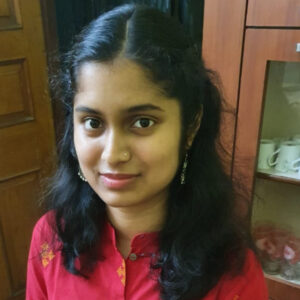 Ananya Roy has completed her masters in English Literature from Jesus and Mary College, University of Delhi, India. Her focus (as an independent research scholar at present) on research is widespread ranging from the renaissance to the modern contemporary literary world, more significantly on gothic, horror, noir, crime, speculative and science fiction(s). Her works have been previously published on e-journals like IJELLH, IJOES, CLRI, IJECLS. Apart from academic articles, she also writes on social issues, winning numerous essay and debate competitions with her pieces being published on magazines like Competition Success Review (CSR) and Pratiyogita Darpan. She has recently self-published her poetry collection Kaleidosocope: Of Women Behind the Curtains (2020) on Notion Press besides her dystopian novel Torque (2018) on Amazon self-publish. Notion Press also published her winning piece in Songs in Isolation: A Collection of Poems (2020). Forever an enthusiast in everything uncanny and unnerving, Ananya would walk the extra mile in search of the multiverse of alternate realities of fiction!

 Dr Ruth Heholt is Associate Professor of Dark Economies and Gothic literature at Falmouth University, UK. She is author of Catherine Crowe: Gender, Genre, and Radical Politics (Routledge, 2020) and co-author of Gothic Kernow: Cornwall as Strange Fiction (Anthem Press, 2022). She is co-editor of several collections including Gothic Britain: Dark Places in the Provinces and Margins of the British Isles (2018), and Haunted Landscapes (2017). She has organised international conferences including Folk Horror in the Twentieth Century (Falmouth and Lehigh Universities 2019) and is editor of the peer reviewed journal Revenant: Critical and Creative Studies of the Supernatural. Her research interests include Gothic, Gender, Ghost Stories, Masculinity, Crime Fiction, Folk Horror, and Domestic Abuse.

 Wynona Villa is currently working on her Master\’s degree in Literary and Cultural Studies at the Ateneo De Manila University, Philippines. Her research interests include Asian Folklore, Horror Studies, Philippine Folk Horror, and Asian Literature.